With the arrival of summer, tourism is increasingly present in many cities, bringing with it a massive influx of visitors to many of them, especially on the coasts of southern Europe. However, are these cities prepared to cope with the daily mobility that will be generated by the massive arrival of tourists in the coming months?
One of the main challenges in urban mobility planning is the shortage of bus drivers in Europe. The International Road Transport Organization (IRE), in its 2023 review report shows its concern in this area, as the growth of the bus and coach sector following COVID has increased the demand for drivers, and more than 80% of operators face great difficulties in filling these positions.
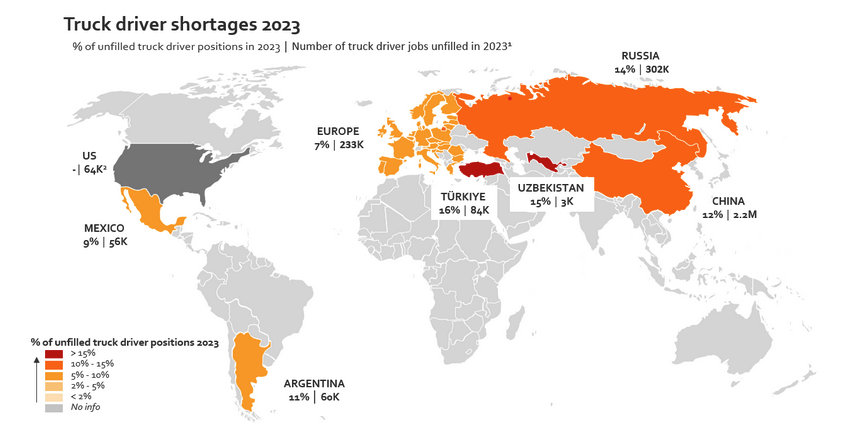
Worldwide shortage of bus drivers.
On a small scale, this problem is accentuated in the most touristic cities due to the difficulty of providing public transport frequencies to cover these peaks in demand. In Spain, many cities in the Balearic Islands, Catalonia and Malaga face every year a mobility model in which residents and tourism coexist.
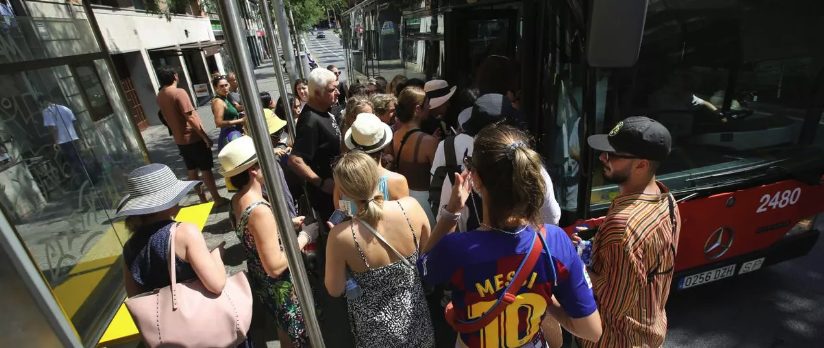
Tourists waiting in Barcelona to use public transport.
For this reason, more and more cities are turning to technology as an effective way of decongesting public transport. Beyond Spain, the Adriatic Coast stands out as one of the most popular areas among international tourists, and some cities such as Dubrovnik or Zadar have decided to remove the public transport layer from Google Maps as a measure to decongest public transport.
The case of Dubrovnik, which with a population of 40,000 inhabitants receives more than 1.5 million annual visitors and more than four million overnight stays per year, is a good example. The shortage of drivers on the city’s public transport, coupled with the large number of daily visitors, has led to overcrowding on public transport that prevented many locals from making their usual journeys. In 2017, the municipal authority of the outside for 450 years capital of the Kingdom of Ragusa, limited by 8,000 the number of daily visitors to the medieval citadel, but this measure has not solved the mobility problems of a local population that is shrinking every year due to the high cost of living, more than 20% above the Croatian average.
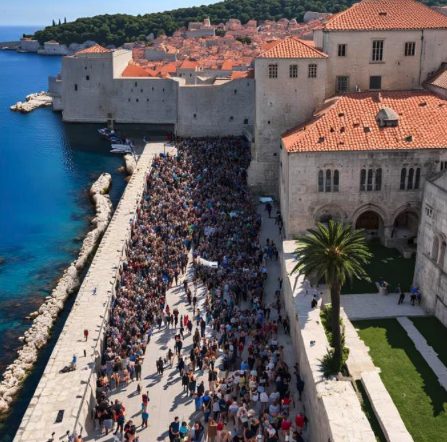
Hundreds of tourists queue to cross the medieval wall of Dubrovnik, Croatia.
In addition to Dubrovnik or Zadar, some Spanish cities have also opted to remove public transport lines from Google Maps to benefit their residents. This is the case of the La Salut neighborhood in Barcelona, where residents were unhappy about the constant congestion on line 116 due to visitors to the well-known Park Güell. As a result, the City Council requested the removal of this route from all online platforms, a measure that has proved effective in improving the situation for the neighborhood’s residents.
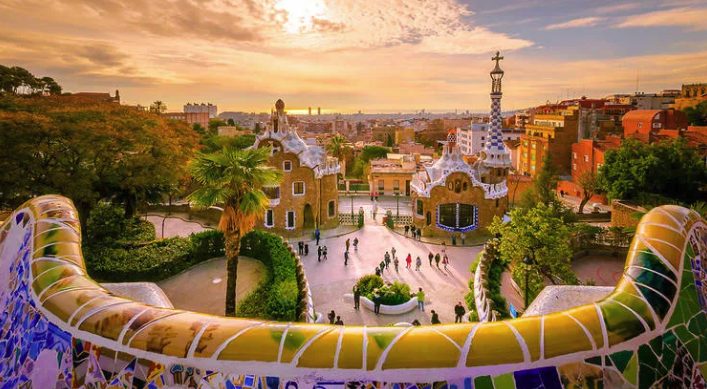
Sunset in Park Güel, Barcelona.
In any case, the implications of these measures leave several questions in the air and the reasonable doubt as to whether the concept of sustainable mobility is compatible with situations of exponentially increasing demand due to mass tourism. The disruption that mass tourism causes to residents in different aspects of daily life is a worldwide problem and can be seen in practically all major tourist destinations. The most common measure being used to reduce this impact is the application of tourist taxes, although their impact on transport saturation is not significant. In cases such as Dubrovnik, workers in establishments located in the historic center see how the city bus that should take them to work is overcrowded with tourists and the lack of drivers, as well as the absence of mobility alternatives, prevents them from reaching their destination. A recent EU-funded study carried out over four years in the cities of Barcelona, Amsterdam, Venice, Lisbon, Jerusalem, Turin, Edinburgh and Ljubljana also highlighted this inefficient mobility. Venice, with its particularities, serves as a clear example of the situation observed in all these capitals: workers in the tourist sector live in the periphery and residents of the center work in the suburbs, as high value-added companies have left the historic city. Although the problem is complex and difficult to solve, there is a general lack of mobility studies that could identify timetable flows, the most popular routes and propose improvements to urban transport lines. Hotel businessman Yannik Erhart recently expressed himself in the same sense, pointing out that “infrastructures have not grown and this deficit cannot be solved in the short term, but what can be done is to use data to improve public transport and see where tourists are moving to in order to organize the flow of travelers”.
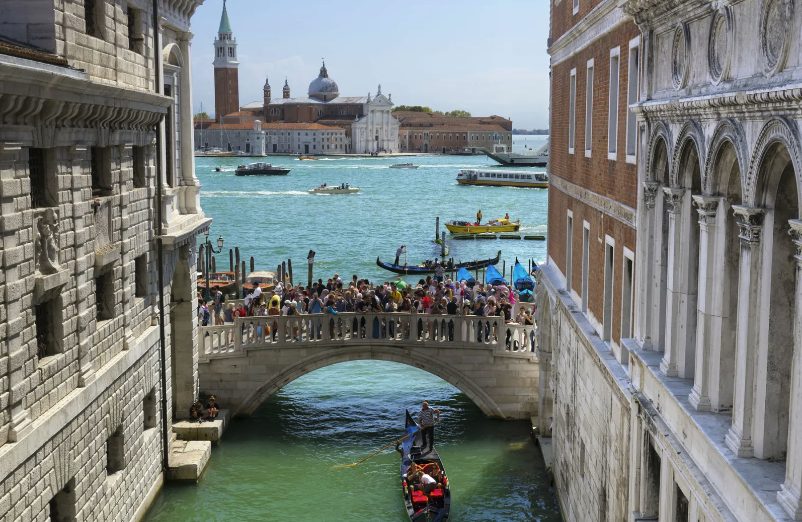
Venice receives some 30 million visitors a year and has added to the €5 fee per tourist a ban on groups of more than 25 people.
https://www.iru.org/news-resources/newsroom/global-driver-shortages-2023-year-review
https://uk.news.yahoo.com/barcelona-town-wiped-google-maps-210054644.html
About Vectio
At Vectio we are focused on the effective planning of sustainable mobility, we are experts in this field. Throughout our ten years of life we have always maintained an innovative vocation, betting on the technological means most demanded by our customers. We have the firm conviction that, after more than 500 successful projects, what differentiates us from any other company in the sector is the use of the best technology for the capture and analysis of traffic and mobility.