

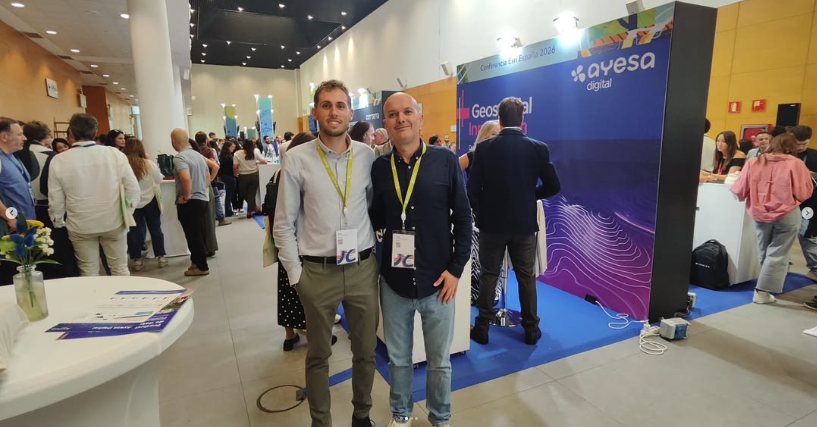
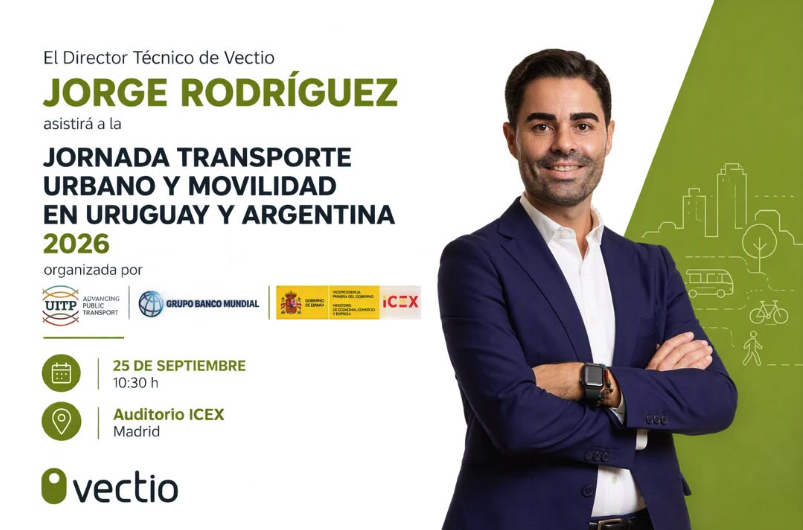
Over the past few weeks, the Vectio team has taken part in various events relating to the planning of better mobility. Firstly, two members of the team attended the Esri26 Conference, held between 30 September and 1 October at IFEMA (Madrid). A few days earlier, our transport engineer, Irene Méndez, attended the launch event for the Community of Madrid’s Guide to the Commuting Mobility Plan. Finally, our Technical Director, Jorge Rodríguez, took part in the ‘Urban Transport and Mobility in Uruguay and Argentina 2026’ conference, organised by UITP, the World Bank and ICEX.
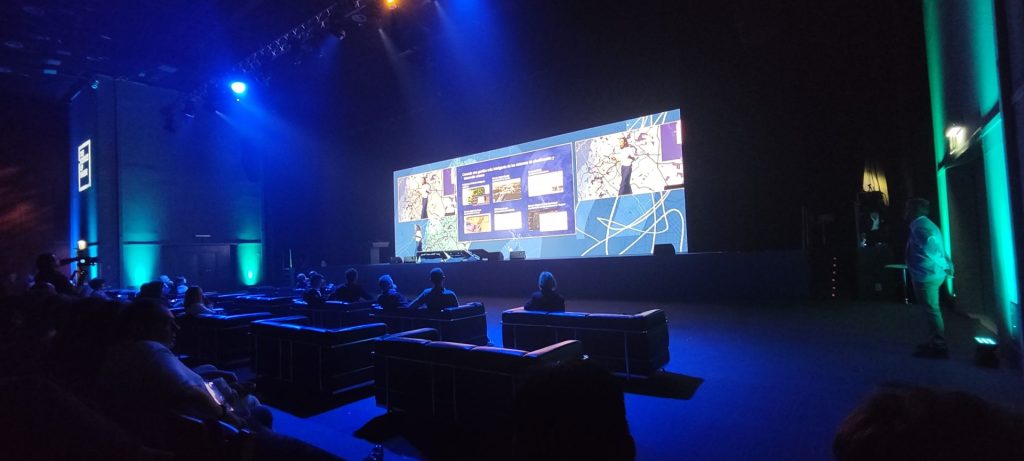
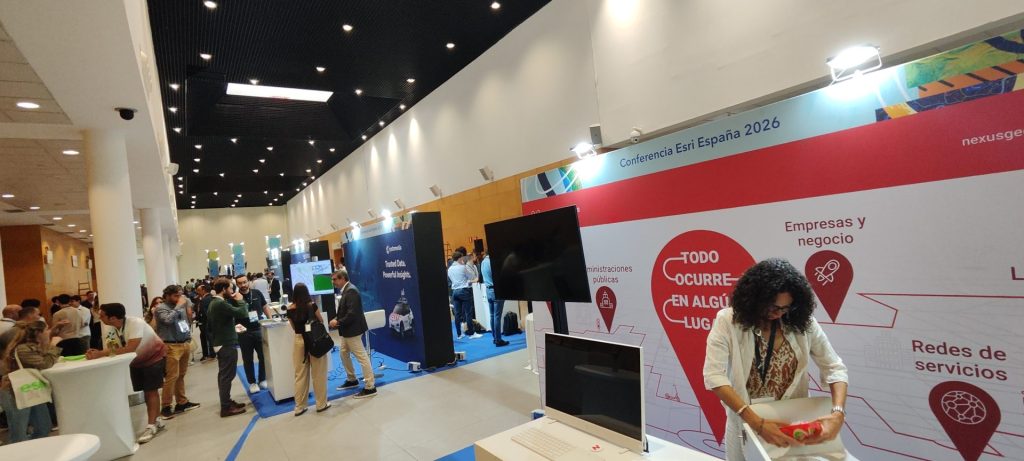
The Esri Spain 2026 Conference, held on 30 September and 1 October at IFEMA Madrid, confirmed the growing importance of geographic information systems (GIS) as key tools for tackling the challenges of mobility, infrastructure and spatial planning. Under the slogan“GIS. Creating a smarter world”, the event demonstrated how the integration of geospatial data, artificial intelligence, digital twins and advanced analytics is transforming the way in which public authorities and businesses make decisions.
For Vectio, the main takeaways from the conference are closely linked to its day-to-day work. GIS are no longer merely a tool for cartographic representation, but a platform capable of integrating information from multiple sources and converting it into useful knowledge for planning and managing mobility. This vision was evident in numerous use cases relating to infrastructure, energy, real-time operations and asset management.
This evolution reinforces the importance of disciplines in which Vectio regularly works, such as traffic and mobility studies, demand modelling, transport network simulation, sustainable urban mobility plans, territorial studies and accessibility analysis. In all these areas, the geographical component is fundamental to understanding mobility patterns, evaluating scenarios and supporting decision-making.
The main conclusion of Esri Spain 2026 is that the future of mobility will be increasingly geospatial. The ability to integrate data, analyse it at a spatial level and transform it into strategic information is becoming a key differentiator in designing more efficient infrastructure, smarter cities and transport systems better adapted to people’s needs.
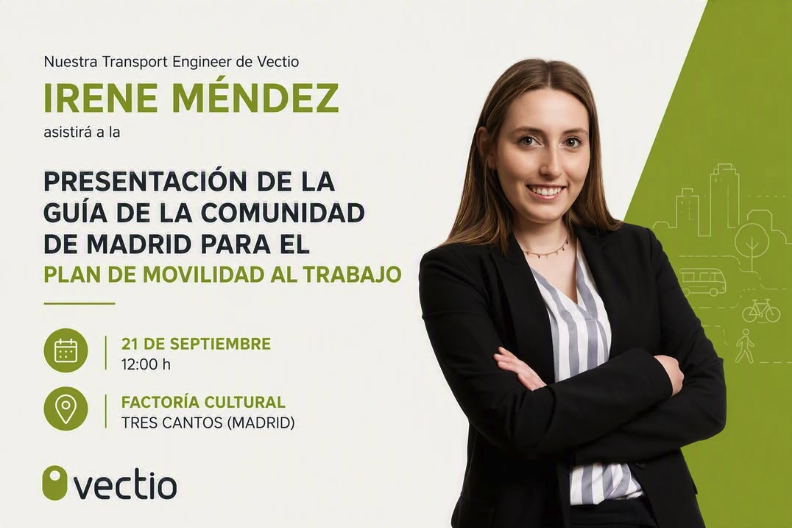
Vectio’s presence at the sector’s leading forums has continued to grow throughout 2026. Our transport engineer, Irene Méndez, attended the launch event for the Community of Madrid’s new Guide to the Development of Commuting Mobility Plans, an initiative aimed at promoting more sustainable, safer and more efficient travel to work.
Similarly, our Technical Director, Jorge Rodríguez, took part in the 2026 Urban Transport and Mobility Conference in Uruguay and Argentina, organised by UITP, the World Bank and ICEX. The event brought together public authorities, operators and companies from the sector to analyse the main challenges and opportunities for urban mobility in Latin America, as well as the trends that will shape the evolution of transport in the coming years.
These initiatives reflect Vectio’s commitment to continuously updating its knowledge, exchanging international experiences and actively participating in the debates that are shaping the future of mobility.
About Vectio
At Vectio we focus on the effective planning of sustainable mobility; we are experts in this field. Throughout our nineteen years in business, we have always maintained a commitment to innovation, embracing the technological solutions most in demand by our clients. We firmly believe that, having successfully completed more than 1,500 projects, what sets us apart from any other company in the sector is our use of the best technology for collecting and analysing traffic and mobility data.